Sales proposal deck template
A presented sales proposal in deck form, generated one per opportunity from your CRM and pricing data.
Free plan, no credit card. Bring your own design or start from this layout.
What’s in this template
Every block is bound to a field in your data. The layout stays exactly as designed; only the values change from one run to the next.
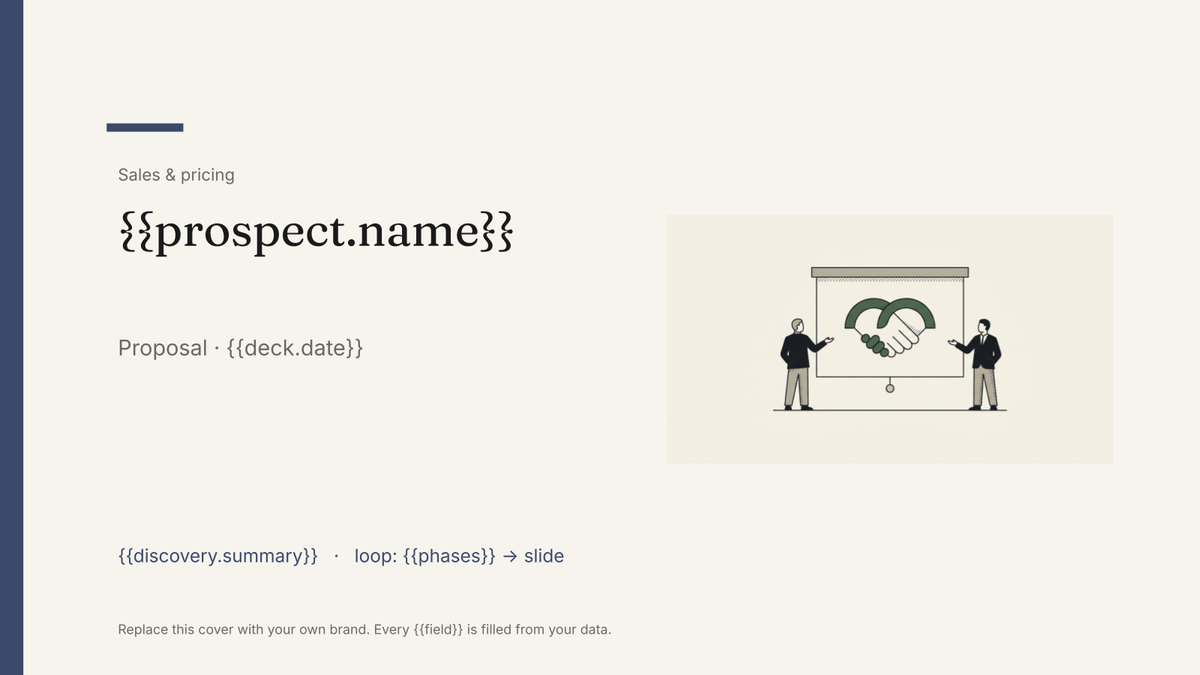
- Cover with the prospect's name and date {{prospect.name}} · {{deck.date}}
- What we heard, from the discovery notes {{discovery.summary}}
- Proposed approach, one slide per phase loop: {{phases}}
- Relevant work and results loop: {{case_studies}}
- Commercials slide with the pricing table {{pricing.total}}
- Timeline and next step {{plan.next_step}}
How this template fills itself
Connect Airtable, Google Sheets, a SQL database, a CSV or a REST API, map each field to a placeholder, and generate. One run can produce a single document or one per matching record.
Opportunities · CRM via REST API
Template: Google Slides or Docs
{{prospect.name}}
Proposal · {{deck.date}}
{{discovery.summary}}
loop: {{phases}} → slide
{{pricing.total}}
one deck per opportunity, with the case studies matched to that prospect's sector
Generated output
SlidesPDFMarlow Retail
Proposal · 4 Sep 2026
Stock data is three days behind the shop floor
3 phase slides
$68,000 total
Who uses this template
Agency new business teams
Walk a prospect through a deck that already carries their words, their sector's case studies and the price you agreed internally.
Read the guideB2B sales teams
Give every rep the same designed deck and let the opportunity record supply the parts that differ.
Read the guideConsultancies
Assemble the approach slides from a library of phases rather than rebuilding a deck for each engagement.
Read the guideA sales proposal deck is the version of a proposal you talk through rather than email. It is a designed artefact: the story runs in a fixed order, the commercials land on one slide, and the whole thing has to look like your company made it on purpose. Google Slides suits that because the layout is fixed — the deck is the same shape for every deal, and only the content inside it changes.
The fixed length is the discipline
A generated deck cannot swell to fit an unusually complicated deal, and that is a feature. Cap the approach section at a set number of phase slides, cap the case studies at two, and put the ordering rules in your data so the most relevant material is what gets placed. If a deal genuinely needs more detail than the deck holds, generate the Google Docs proposal alongside it from the same record and leave the deck as the thing you present.
Related templates
All sales & pricing →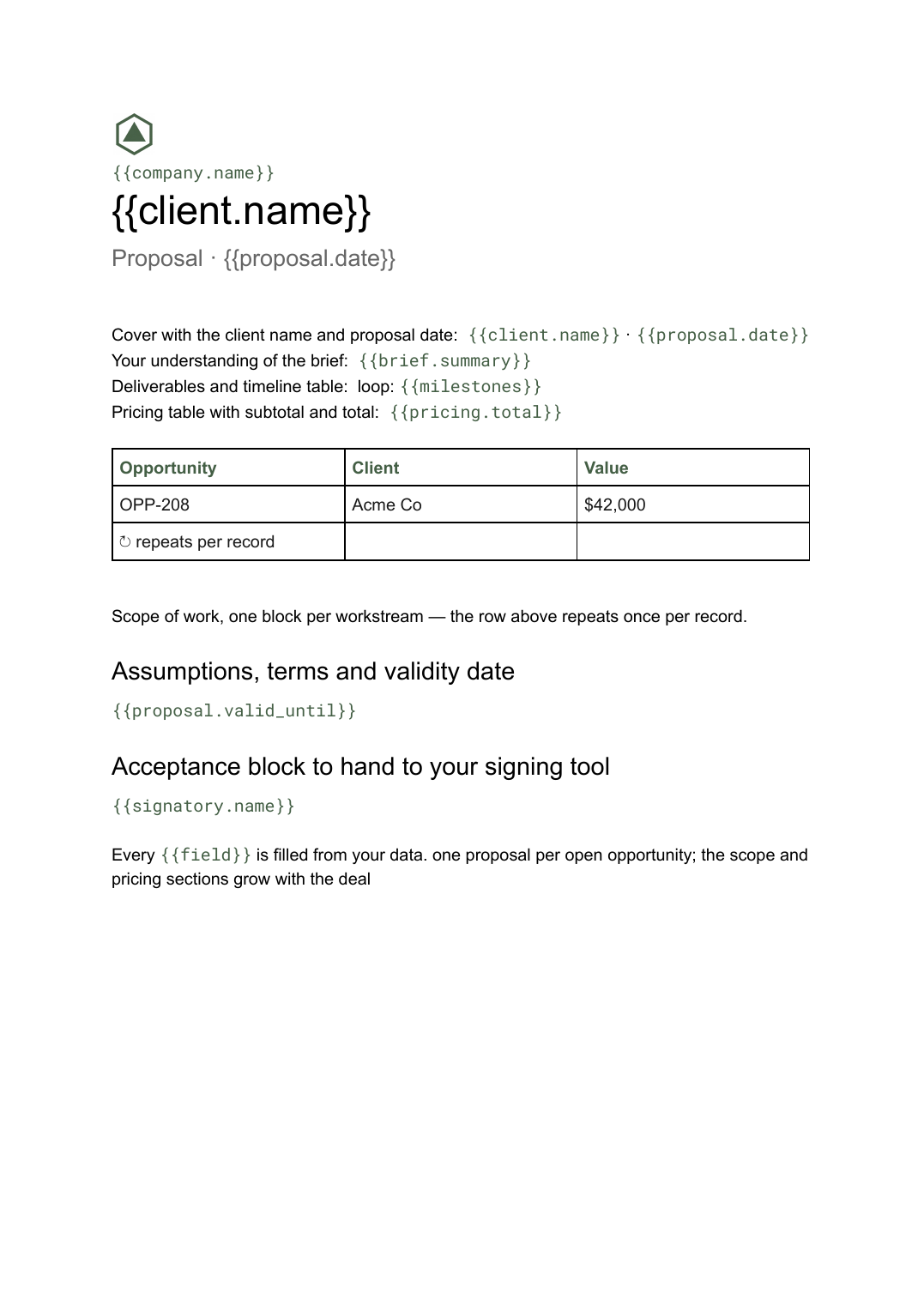 Google Docs
 Business proposal template for Google Docs
A client-facing proposal with scope, deliverables and pricing, generated one per opportunity from your deal data.
View template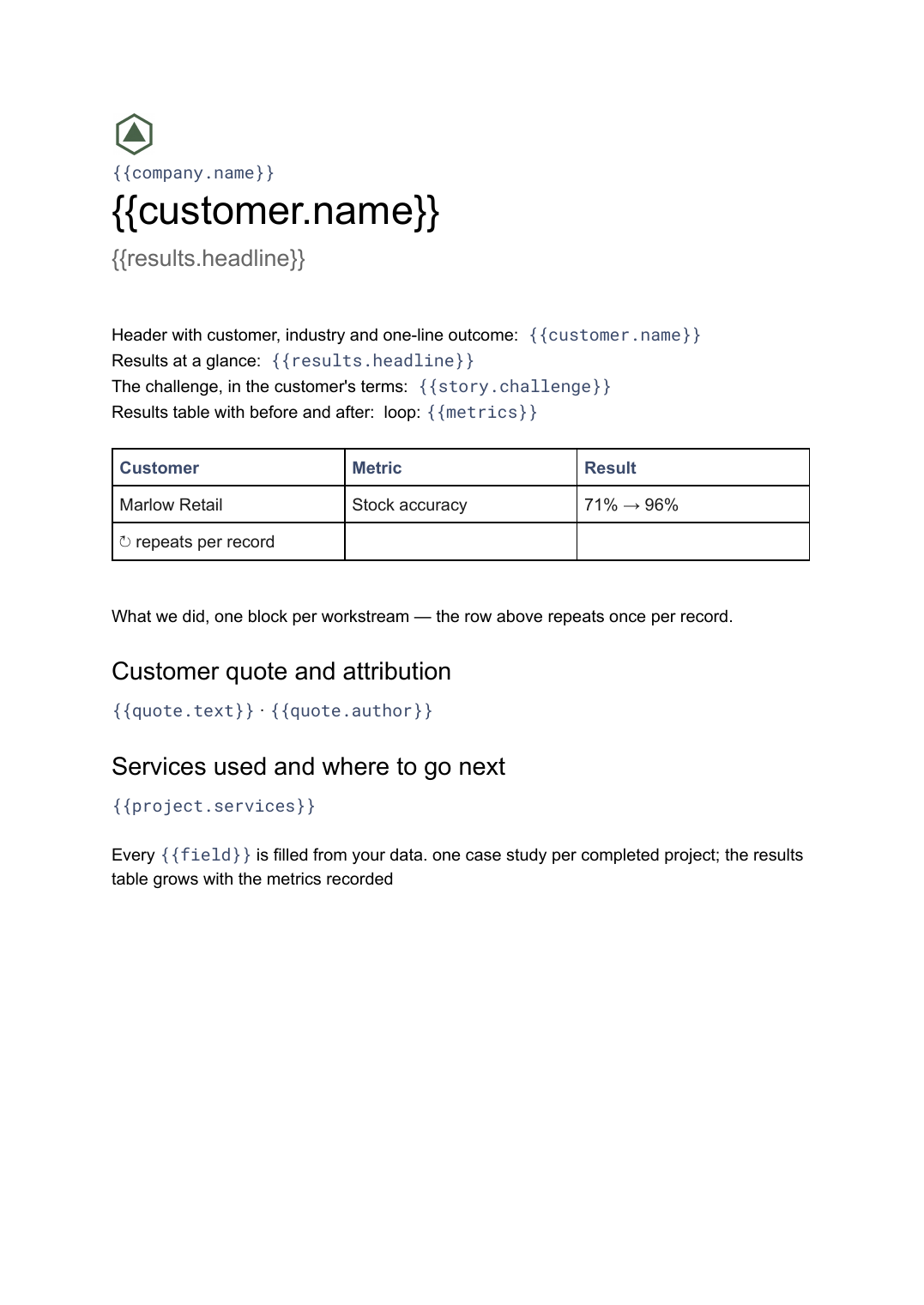 Google Docs
 Case study template
A customer story with challenge, approach and measured results, generated one per project from your delivery data.
View template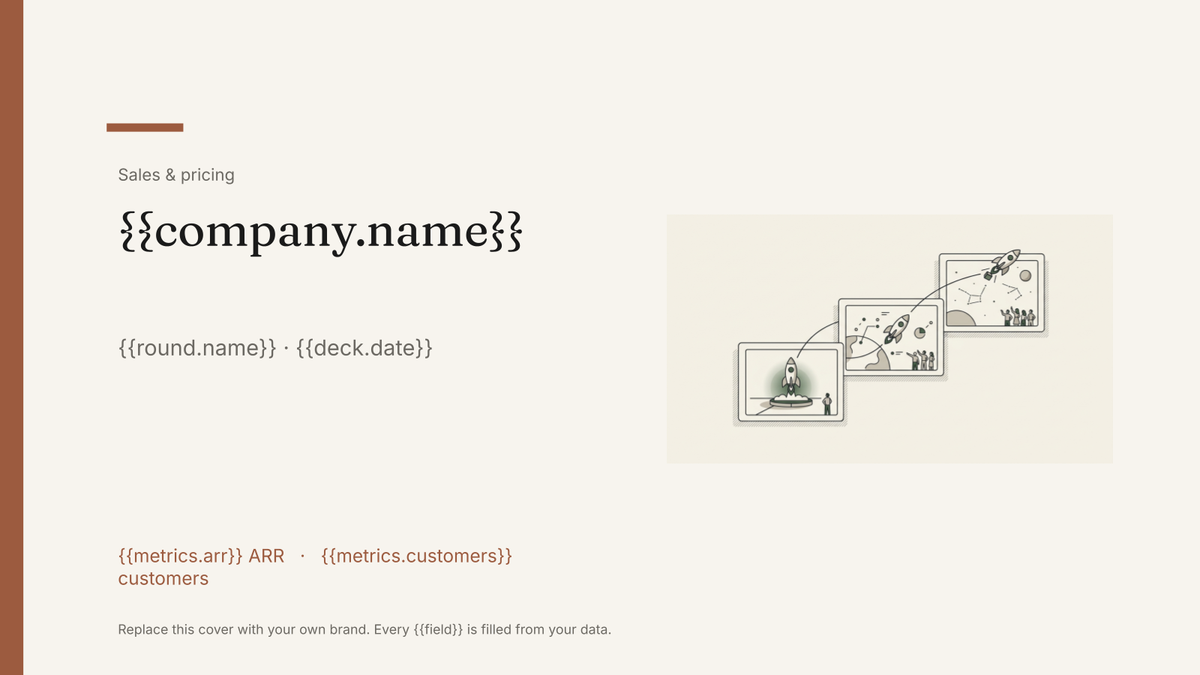 Google Slides
 Pitch deck template for Google Slides
An investor pitch deck whose metric and traction slides are filled from your live numbers rather than retyped.
View template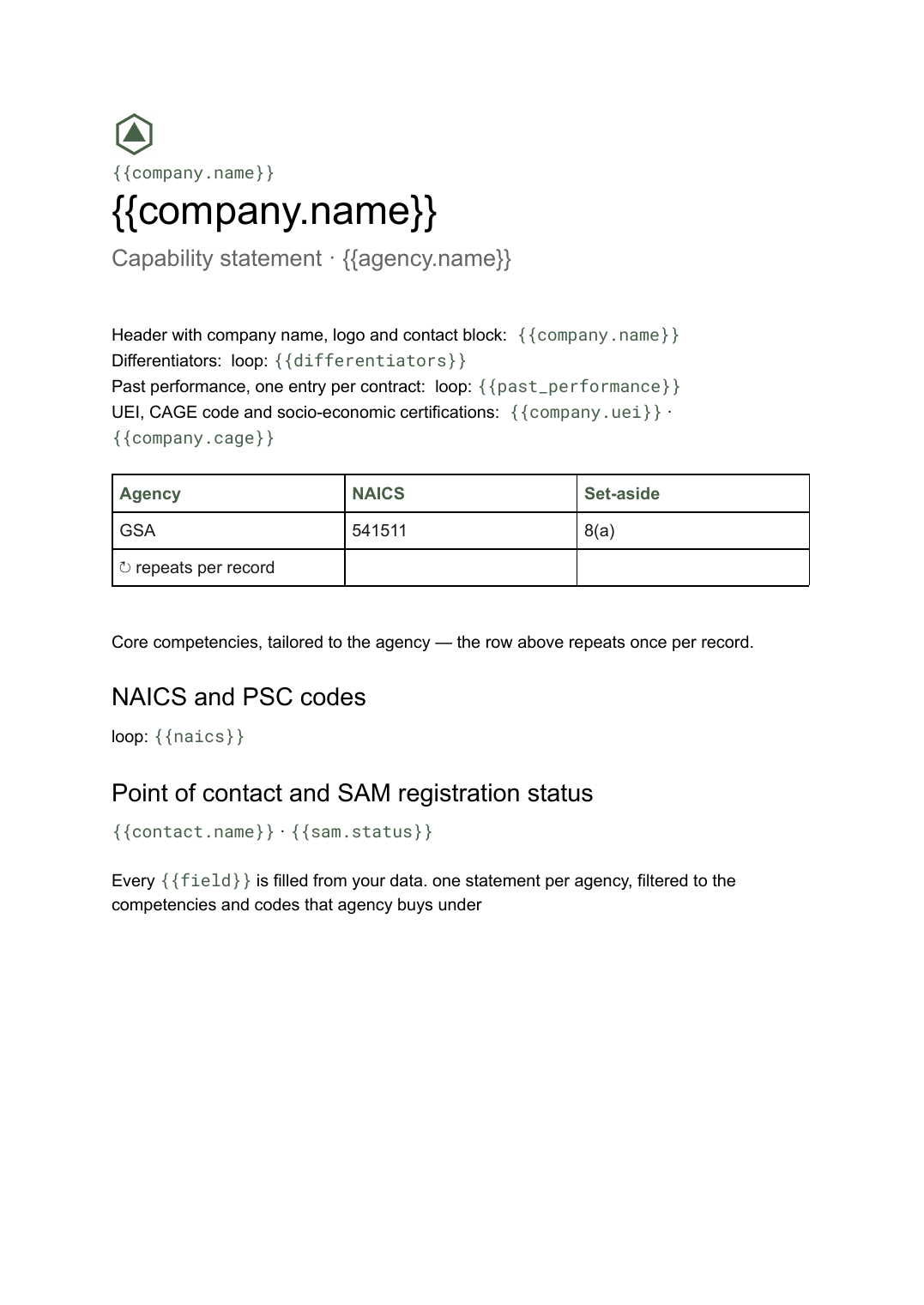 Google Docs
 Capability statement template
A one-page government contracting summary with core competencies, codes and past performance, generated from one company record.
View templateCommon questions, answered
Can I use our own deck design? +
Should this be a deck or a document? +
How do the right case studies end up in the right deck? +
Where does the deck's content come from? +
Generate this document from your data
Start on the free plan, connect a data source, and export a real Google Slides document. No watermark, no credit card.